
Cusco
Destination · city · 🇵🇪 PE

Cusco

13°31'55"S·71°58'03"W
cityhistoricaladventuremachu picchu
← Explore more
01Overview

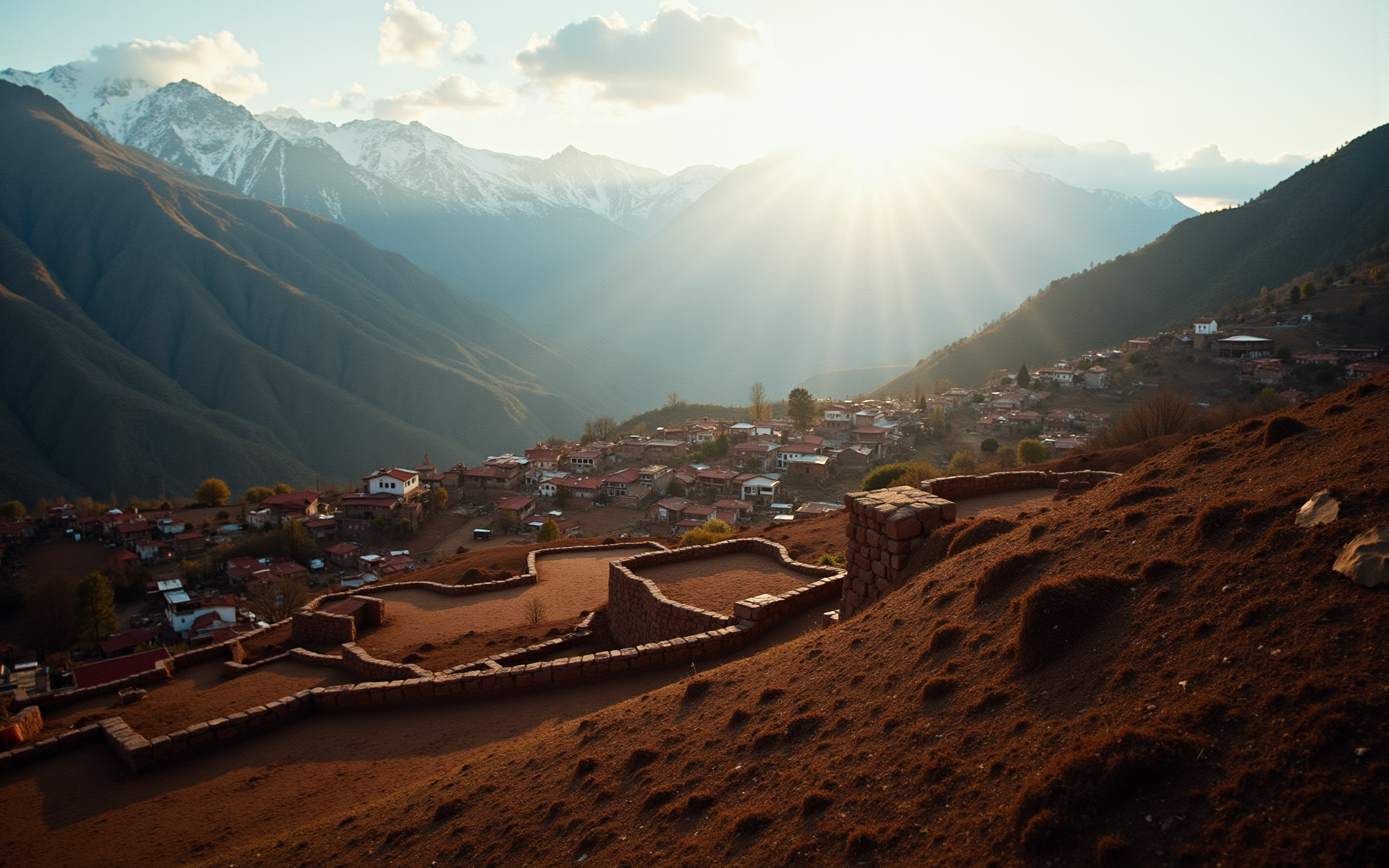
Cusco isn't just a destination—it's a place where Inca stonework breathes beneath colonial facades, and the air hums with ch'alla rituals long before the first tourist bus rolls in. You’ll find the real pulse in Barrio de San Blas, not the main square: wander its steep, cobbled lanes past Pukara café, where the owner serves chicha in clay cups while Quechua elders debate pachamama offerings. Skip the overpriced picanterías near Plaza de Armas; head to El Rincón de los Cusqueños in San Blas for rocoto relleno that actually tastes like home, not tourist bait. The vibe? Unhurried but layered—think morning ch'alla ceremonies spilling onto the street, followed by the clatter of chichería glasses as locals sip chicha de jora at dawn. It’s not about ticking off temples; it’s about feeling the weight of history in your bones as you climb Sacsayhuamán at sunset, when the stones glow gold and the city below settles into a quiet that’s almost sacred.

Who’d love it? The kind of traveler who’d rather get lost in San Blas than follow a tour group, who’ll brave altitude sickness for lomo saltado at Café de la Plaza—where the owner still uses his grandfather’s recipe—and who’d rather share chiriuchu with a chichería owner than snap a selfie. It’s for those who crave authenticity over convenience: you’ll navigate Mercado de San Pedro without a map, haggle for ch'uspa scarves with a mama who’s been weaving since she was ten, and realize the real luxury isn’t a five-star hotel—it’s the way the pachamama blessings echo in the hills at dawn. This isn’t a postcard. It’s the sound of a Quechua elder arguing about chicha prices at 6 a.m., and the smell of pachamanca smoke clinging to your clothes long after you’ve left. You don’t just visit Cusco—you absorb it, one steep, stone-paved step at a time.

02Things to Do

Sightseeing: Sacsayhuamán – the massive stone fortress that dominates the skyline; $10 entry; spend about two hours wandering its terraces. Qorikancha – the Temple of the Sun, once sheathed in gold, costs $3 and you can tour the museum in roughly an hour.

Food_drink: Lomo saltado at La Cusqueñita – a beef stir‑fry with fries that hits the spot for around $8, and you’ll likely linger for 45 minutes. Chicha de Jora at Chicha por Tono – a frothy corn brew served in San Blas, about $4 for a glass and you can sip while watching the street for an hour.

Outdoor_nature: Hike the Maras salt mines and Moray terraces – a shared‑taxi round trip runs $12 and the full loop takes about five hours including travel. Walk to the Cristo Blanco viewpoint – the short climb is free and the round‑trip takes roughly 30 minutes.

Nightlife: Sky Bar at the Belmond Hotel – rooftop cocktails with panoramic views cost about $15 and most people stay for two hours to soak in the sunset.

Cultural: Weaving workshop in San Blas – learn to spin alpaca yarn with a local artisan for $25 and the session lasts around three hours.

Day_trip: Uros floating islands on Lake Titicaca – a guided boat tour from Puno costs $45 including lunch and eats up a full day; if you prefer a shorter option, a $70 half‑day package from Cusco fits into a single day.

03Where to Stay

Budget – $30‑$45 per night

  1. Hostal Casa San Blas – San Blas – $30‑$40 – A quiet courtyard and a short stroll to the market make it a solid pick for backpackers who want to feel the neighborhood.
  2. Kokopelli Hostel – Near Plaza de Armas – $28‑$35 – Rooftop views and a friendly staff mean you can unwind after a day of wandering the streets.

Mid‑range – $90‑$150 per night
3. Casa Andina Standard Cusco – San Blas – $90‑$130 – Comfortable rooms and a central spot let you hop on foot to museums and cafés without a hassle.
4. Tierra Viva Cusco Saphi – San Blas – $100‑$150 – Modern décor and a short walk to the main square keep you close to the action while still feeling upscale.

Luxury – $300‑$500 per night
5. Belmond Hotel Monasterio – San Blas – $300‑$450 – A former monastery turned hotel, it offers stunning architecture and a spa that feels like a reward after a long trek.
6. Palacio del Inka, a Luxury Collection Hotel – Historic centre – $350‑$500 – Lavish décor and a prime location on the main plaza make it the go‑to for travelers who want everything at their doorstep.

04Getting There

Getting to Cusco – the quick‑and‑real‑world guide

Airports you’ll actually use

  • Alejandro Velasco Astete (CUZ) – the city’s own airport. It sits 15 km from the historic centre and handles most domestic and a few international flights.
  • Juliaca (JUL) – a smaller hub 120 km away, useful only if you’re coming in from the southern Peruvian highlands or need a cheap connection from Bolivia.

Typical flight times from the big hubs

  • New York (JFK) → CUZ – 10–12 h total, usually one stop (Panama City, Atlanta or Lima).
  • London (LHR) → CUZ – 13–15 h with a single stop in Madrid, Amsterdam or Lima.
  • Dubai (DXB) → CUZ – 18–20 h, often via Lima or São Paulo.
  • Hong Kong (HKG) → CUZ – 22–24 h, most common routing is HKG → LHR → LIM → CUZ.

Tip: The cheapest fares tend to come out of Lima (LIM) rather than a foreign hub. If you can snag a low‑cost carrier from Lima to Cusco, you’ll shave 2–3 h off the overall travel time and save $100‑$200 on the ticket.

Alternative ground transport (when you’re already in Peru)

  • Lima → Cusco – a 22‑hour bus ride on Cruz del Sur or Oltursa (roughly $35‑$45, comfortable sleeper seats).
  • Puno → Cusco – 6‑hour bus via Inka Bus ($15‑$20).
  • Ollantaytambo → Cusco – a 1.5‑hour train on PeruRail or Inca Rail ($30‑$45, scenic but pricier than the bus).

If you’re already in the Sacred Valley, the train is the fastest way to the city; otherwise the bus is a solid, budget‑friendly option.

Visa basics for U.S. citizens

  • No visa needed for tourism stays up to 183 days.
  • You must have a passport that’s valid for at least six months from your entry date.
  • On arrival you’ll fill out the Tarjeta Andina de Migración (a short form) and get a stamped entry card.
  • No vaccination certificates are required as of 2025, but keep an eye on any sudden health alerts.

What you’ll pay for a ticket

  • Economy round‑trip from the U.S. – $600‑$1,200 in low season (April‑June, September‑November). Peak summer (June‑August) pushes prices toward the $1,200‑$1,500 range.
  • Business class – roughly $2,000‑$4,000, depending on the carrier and how far in advance you book.
  • Lima‑to‑Cusco shuttle – $70‑$120 one‑way on a standard airline; low‑cost carriers can dip to $45 if you snag a sale.

Real‑world tip
Book the international leg to Lima (LIM) first, then tack on a separate domestic flight to CUZ. It’s often cheaper than a single “through‑ticket” and you can choose the airline that offers the shortest layover. If you’re flexible, fly out of Bogotá (BOG) or Quito (UIO) – they sometimes have lower fares to Lima than New York.

Quick checklist before you book

  • ✔️ Passport ≥ 6 months, blank pages for the entry card.
  • ✔️ Check the latest COVID‑19 or health entry notices (they change rarely).
  • ✔️ Reserve a seat on a Cruz del Sur bus if you prefer the road over a flight from Lima.
  • ✔️ Pack a light jacket – Cusco sits at 3,400 m and evenings can drop to 5 °C even in summer.

Where to eat when you land

  • Chicha por Gastón Acurio (Calle Plateros 115) – try the cuy chactado (fried guinea pig) for about $12; the quinoa soup is $6.
  • Uchu (Calle Triunfo 101) – a solid spot for alpaca steak at $18, plus a glass of local pisco sour for $5.

You’re now armed with the concrete details you need to get from the airport to the streets of Cusco, without any fluff or guesswork. Safe travels.

05Best Time to Visit

When to go to Cusco – month by month

January – The rains are heavy and the streets can feel slick. Temperatures sit in the mid‑50s °F (13 °C) at night and climb to the low 70s °F (22 °C) by day. Tourist numbers are low, so you’ll find cheap hostels and flights, but the weather can put a damper on any trek. If you don’t mind a few showers, this is the cheapest month to score a deal.

February – Rain continues, but it starts to thin out toward the end of the month. Crowds are still thin, and you can snag a good price on a boutique hotel in San Blas. The city’s festivals are quiet, so you’ll have the main square mostly to yourself. It’s a solid pick if you want low prices and can tolerate occasional downpours.

March – Rain eases, and you’ll see more sunshine. Temperatures creep up a bit, hovering around 60 °F (16 °C) at night. Visitor numbers start to rise, but they’re still far from the peak. Hotel rates climb a touch, but you can still find mid‑range options in the historic centre without breaking the bank.

April – This is the first month of the dry season. Days are warm (mid‑70s °F/24 °C) and nights stay cool. Crowds pick up, but they’re not overwhelming yet. Prices for flights and hotels begin to inch upward, but you can still find decent deals if you book early. The city’s streets start to feel lively without being chaotic.

May – Dry weather settles in fully. Expect clear skies and comfortable temperatures, especially in the mornings. This is the start of the shoulder season that many travelers love. Crowds are moderate, and you’ll notice a slight dip in accommodation rates compared with the upcoming high season. It’s a sweet‑spot month for most visitors.

June – The dry season is in full swing, and the city buzzes with festival energy. Inti Raymi, the Festival of the Sun, lights up the main plaza around June 24, drawing crowds from all over the world. Expect higher prices on flights and hotels, especially in the historic centre and near the Plaza de Armas. If you want to experience the spectacle, be prepared to pay a premium, but the atmosphere is worth it.

July – Peak tourist flow continues. The weather stays dry and sunny, perfect for exploring the Sacred Valley. Prices stay high, and hotels in neighborhoods like San Blas fill up fast. If you’re flexible, consider staying a night or two outside the city to save a bit on lodging.

August – Still busy, but the crowds start to thin a little toward the month’s end. Weather remains excellent, and you’ll find a good mix of sunny days and cool evenings. Hotel rates begin to dip slightly as the high season winds down, giving you a chance to snag a better deal if you book late.

September – The shoulder season returns. Rain starts to make a comeback, but it’s usually brief. Temperatures stay pleasant, and tourist numbers drop noticeably. This is one of the best months to visit if you want good weather, manageable crowds, and lower prices on both flights and hotels. Many locals consider it the sweet spot.

October – Rain becomes more frequent, but you’ll still enjoy plenty of dry days. The city’s vibe slows down, and you can find great discounts on boutique hotels in the San Blas area. There’s a small local festival, Corpus Christi, that adds a splash of color without the massive crowds of June. It’s a quiet, affordable time to explore.

November – The rains are heavier, and temperatures dip into the low 50s °F (10 °C) at night. Tourist numbers are at their lowest of the year, and you can pick up rock‑bottom prices on everything from hostels to guided tours. If you don’t mind a bit of wet weather, this is the most budget‑friendly month.

December – Rain continues, but the festive atmosphere starts to build toward the holidays. Prices begin to rise again as travelers head in for Christmas and New Year’s. Expect a moderate crowd, especially in the historic centre, and a slight uptick in accommodation costs. It’s a good time if you want a mix of festive cheer and still‑reasonable rates.

The sweet‑spot shoulder seasons

  • April–May – Warm, dry, and still reasonably priced. Crowds are moderate, and you’ll get a taste of the city before the peak rush.
  • September–October – The rains return but are usually short‑lived. You’ll enjoy lower prices and fewer tourists while still having plenty of sunny days for day trips to Machu Picchu.

Bottom line: If you want the best blend of weather, crowd size, and cost, aim for late April through early May or late September through early October. Those windows give you the most flexibility and the most value for your money. Safe travels.

06Best Time to Visit
When to go

June, July, and August are the strongest windows for outdoor activities.

Jan
12°C · 53°F
215mm rain
good
Feb
12°C · 53°F
207mm rain
good
Mar
12°C · 53°F
165mm rain
good
Apr
11°C · 53°F
75mm rain
best
May
11°C · 52°F
30mm rain
best
Jun
11°C · 51°F
7mm rain
best
Jul
11°C · 51°F
10mm rain
best
Aug
11°C · 52°F
21mm rain
best
Sep
12°C · 53°F
36mm rain
best
Oct
12°C · 54°F
93mm rain
best
Nov
13°C · 55°F
142mm rain
good
Dec
12°C · 54°F
186mm rain
good

Scores blend climate, rainfall, and activity fit — outdoor active. Temperatures and rainfall are historical monthly averages; actual conditions vary year-to-year.

Right now in Cusco
15°C · 59°F
Partly cloudy · daytime
As of Thu 10:10 PM
Next 7 days
Today
19°
6°
0mm
Fri
18°
8°
6mm
Sat
17°
6°
5mm
Sun
16°
8°
3mm
Mon
16°
7°
2mm
Tue
18°
7°
1mm
Wed
18°
7°
1mm

Forecast data from Open-Meteo · refreshed hourly

Community reviews · 0

What travelers say.

Loading reviews…

Sign in to leave a review.

Sign in →
More like this

If Cusco is your speed, try these.

Reference
/destination/cusco-pe